Plan Your Australian Adventure: Best Times to Go

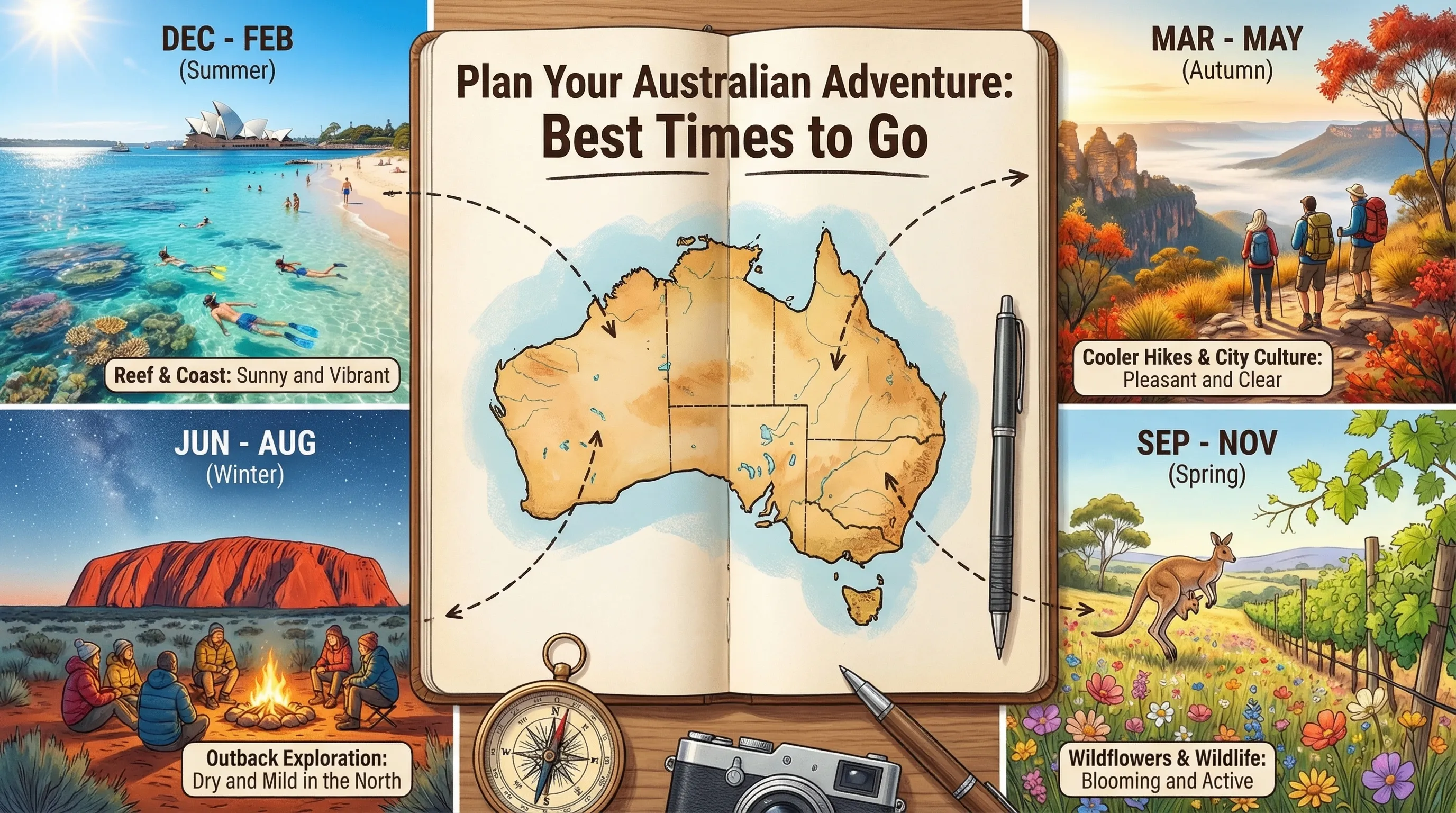
When planning your Australian adventure, timing is everything. The best time to visit Australia depends on what you want from your trip. If you love sunny beaches and vibrant city life, the summer months from December to February are perfect.
However, if you prefer milder weather and fewer crowds, consider visiting during the shoulder seasons of March to May or September to November. These months offer some of the best times of the year for a more relaxed vacation experience.
With over seven million international visitors in 2024, Australia remains a top destination for travelers worldwide.
Best Months to Visit
Choosing the right time for your Australian adventure can make all the difference. Whether you're chasing the sun or seeking a quieter escape, understanding the best months to visit is key.
Let's go through a month-by-month guide to help you plan your trip.
Peak Tourist Season
December to February
During these months, Australia bursts into life with summer's vibrant energy. You can bask in the sun on iconic beaches like Bondi or explore bustling cities such as Sydney and Melbourne. This period marks the peak tourist season, attracting travelers from around the globe. The weather is hot, perfect for swimming and outdoor activities.
However, be prepared for crowds and higher prices. If you thrive in lively environments, this is the best time to travel to Australia.
June to August
Winter in Australia offers a different charm. While the southern regions experience cooler temperatures, the northern parts remain warm and inviting. You can enjoy skiing in the Snowy Mountains or explore the Great Barrier Reef without the summer rush. This season also sees an influx of tourists, especially in popular destinations.
If you love winter sports or want to escape the heat, consider visiting during these months.
Off-Peak Season
March to May
Autumn in Australia provides a delightful blend of mild weather and fewer tourists. You can wander through vineyards in the Barossa Valley or enjoy the stunning autumn foliage in Tasmania. This off-peak season offers a more relaxed atmosphere, allowing you to explore at your own pace.
Flight deals are often better during this time, making it an ideal choice for budget-conscious travelers.
September to November
Spring brings Australia to life with blooming flowers and pleasant temperatures. You can witness the wildflower season in Western Australia or attend the Melbourne Cup, a highlight of the social calendar. This period is perfect for those who prefer a quieter experience without compromising on weather.
The shoulder season offers a balance between enjoyable weather and manageable crowds, making it the best time to visit Australia for many.
Understanding Australia's Weather and Climate
When you think about Australia, you might picture sun-soaked beaches or lush rainforests. But the reality is that Australia's climate is as diverse as its landscapes. Understanding the weather patterns can help you plan the perfect trip.
Let's break it down season by season and explore the regional variations.
Seasonal Overview
Summer (December to February)
Summer in Australia is all about sunshine and outdoor fun. You can expect hot temperatures, especially in the southern regions. It's the perfect time for beach lovers to hit the coast. However, keep in mind that this is also the peak tourist season, so popular spots can get crowded.
If you enjoy vibrant city life and festivals, summer is your season.
Autumn (March to May)
Autumn offers a more relaxed vibe. The weather cools down, making it ideal for exploring cities and natural wonders without the summer crowds. You can enjoy long, sunny days and mild nights. This season is great for visiting vineyards or taking scenic drives through the countryside.
Plus, flight deals are often more attractive during this time.
Winter (June to August)
Winter in Australia varies greatly depending on where you are. The southern regions experience cooler temperatures, perfect for skiing in the Snowy Mountains. Meanwhile, the northern parts remain warm and dry, offering a different kind of adventure.
If you prefer fewer tourists and enjoy winter sports, this is a fantastic time to visit.
Spring (September to November)
Spring breathes new life into Australia. Flowers bloom, and the weather becomes pleasantly warm. It's an excellent time for outdoor activities like hiking or attending cultural events. The shoulder season means fewer crowds, allowing you to explore at your own pace.
Spring is a favorite for many travelers seeking a balance between good weather and tranquility.
Regional Climate Variations
Northern Australia
In Northern Australia, the climate is tropical. You can expect two main seasons: the wet and the dry. The dry season, from May to October, offers warm and sunny conditions, making it the best time to visit.
During the wet season, from November to April, heavy rains and humidity prevail. If you're planning to explore the Great Barrier Reef or Kakadu National Park, aim for the dry months.
Southern Australia
Southern Australia experiences a temperate climate with four distinct seasons. Summers are hot and dry, while winters are mild and wet. Cities like Melbourne and Adelaide offer a mix of cultural experiences and natural beauty. Spring and autumn are particularly pleasant, with comfortable temperatures and fewer tourists.
These seasons are perfect for exploring the region's wineries and coastal towns.
Australia's climate is influenced by various factors, including its vast size and geographical diversity. According to research, climate change impacts are becoming more pronounced, affecting weather patterns and increasing the frequency of extreme events like droughts and floods.
Understanding these variations can help you make the most of your Australian adventure.
Avoiding Crowds: School Terms and Public Holidays
Planning your trip to Australia involves more than just picking the right season. You also need to consider school terms and public holidays. These periods can significantly impact your travel experience, especially if you prefer avoiding crowds.
School Holidays
School holidays in Australia vary by state and territory, but they generally follow a similar pattern. Understanding these dates can help you plan your visit during quieter times. Here's a quick overview:
Term 1 Holidays: Typically late March to mid-April.
Term 2 Holidays: Usually late June to mid-July.
Term 3 Holidays: Often late September to early October.
Term 4 Holidays: Generally mid-December to late January.
During these breaks, families often travel, leading to busier attractions and higher accommodation prices. If you want a more peaceful experience, try to avoid these periods.
For instance, South Australian state schools have specific term dates that align with these general patterns, making it easier to anticipate peak travel times.
Major Public Holidays
Public holidays in Australia can also affect your travel plans. These holidays often see an increase in domestic travel, as locals take advantage of long weekends. Some key public holidays include:
Australia Day: January 26
Anzac Day: April 25
Queen's Birthday: Varies by state, typically in June
Christmas Day: December 25
Boxing Day: December 26
Each state and territory may have additional public holidays, so it's wise to check the specific dates for the region you're visiting. For example, Western Australia has its own set of public holidays, which can influence travel patterns in that area.
By planning around these school terms and public holidays, you can enjoy a more relaxed and enjoyable Australian adventure. You'll find fewer crowds at popular attractions and potentially better deals on flights and accommodations.
So, keep these dates in mind as you map out your journey.
Seasonal Activities and Events
Alternative Time to Visit
When planning your trip to Australia, you might wonder if there's a perfect time to visit. While peak seasons have their allure, exploring during alternative times can offer unique benefits. Consider why shoulder seasons and off-peak travel might be the best option for your upcoming adventure.
Benefits of Visiting During Shoulder Seasons
Shoulder seasons in Australia, typically from March to May and September to November, provide a sweet spot for travelers. These months offer a delightful balance between favorable weather and affordability.
You can enjoy the beauty of Australia's landscapes without the hustle and bustle of peak tourist crowds.
Pleasant Weather: During shoulder seasons, the climate is generally mild and comfortable. You can explore outdoor attractions without the extreme heat of summer or the chill of winter. This makes it an excellent time for activities like hiking, sightseeing, and beach visits.
Attractive Prices: Traveling during shoulder seasons often means better deals on flights and accommodations. Airlines and hotels tend to lower their prices as demand decreases, allowing you to stretch your travel budget further.
Less Crowded Attractions: With fewer tourists around, you can enjoy popular sites at a more relaxed pace. Whether you're visiting the Great Barrier Reef or exploring Sydney's iconic landmarks, you'll have more space to soak in the experience.
Unique Experiences: Shoulder seasons often coincide with local festivals and events. You might stumble upon cultural celebrations or seasonal activities that add a special touch to your trip.
Benefit | Description |
|---|---|
Pleasant Weather | Mild temperatures ideal for outdoor activities |
Attractive Prices | Lower costs for flights and accommodations |
Less Crowded Attractions | More space and time to enjoy popular sites |
Unique Experiences | Opportunities to join local festivals and events |
Considerations for Off-Peak Travel
Off-peak travel, which typically falls outside the main tourist seasons, offers its own set of advantages. However, it's essential to consider a few factors to ensure a smooth journey.
Flexibility in Travel Dates: Off-peak travel allows you to be more flexible with your itinerary. You can choose travel dates that suit your schedule without worrying about high prices or limited availability.
Avoiding Long Queues: With fewer tourists, you can skip the long lines at attractions and enjoy a more leisurely experience. This is particularly beneficial if you're visiting popular sites like the Sydney Opera House or Uluru.
Potential Weather Challenges: While off-peak travel can be rewarding, it's crucial to be aware of potential weather conditions. Some regions may experience more rain or cooler temperatures, so pack accordingly and plan your activities with the climate in mind.
Local Interactions: Traveling during quieter times often means more opportunities to interact with locals. You can gain insights into Australian culture and lifestyle, making your trip more enriching.
By considering these factors, you can make the most of your off-peak travel experience. Whether you're drawn to the tranquility of shoulder seasons or the flexibility of off-peak travel, Australia offers a wealth of experiences waiting to be discovered.
What Else to Know
When you're gearing up for an Australian adventure, understanding the local culture and transportation can make your trip smoother and more enjoyable. Let's dive into some essential tips that will help you navigate Australia like a pro.
Cultural Etiquette
Australia is known for its friendly and laid-back culture. However, being aware of certain customs can enhance your experience and help you connect with locals. Here are some key points to keep in mind:
Greetings: Australians often greet each other with a casual "G'day" or "Hello." A firm handshake is common when meeting someone for the first time. Eye contact is important as it shows respect and attentiveness.
Tipping: Tipping is not mandatory in Australia, but it's appreciated for exceptional service. In restaurants, leaving a tip of 10% is considered generous. For taxi drivers and hotel staff, rounding up the fare or leaving a small amount is customary.
Respect for Indigenous Culture: Australia has a rich Indigenous heritage. When visiting sacred sites like Uluru, show respect by following guidelines and not climbing or disturbing the area. Engaging with Indigenous tours and experiences can provide valuable insights into their culture and history.
Casual Dress Code: Australians generally dress casually. In cities, smart-casual attire is suitable for dining out or attending events. Beachwear is appropriate for coastal areas, but remember to cover up when leaving the beach.
Transportation Tips
Getting around Australia can be an adventure in itself. With vast distances between cities and diverse landscapes, choosing the right mode of transport is crucial. Here are some tips to help you navigate the country efficiently:
Public Transport: Major cities like Sydney, Melbourne, and Brisbane have reliable public transport systems, including buses, trains, and trams. Consider purchasing a travel card, such as the Opal card in Sydney or the Myki card in Melbourne, for convenient and cost-effective travel.
Domestic Flights: Given Australia's size, flying is often the quickest way to travel between cities. Airlines like Qantas, Virgin Australia, and Jetstar offer frequent domestic flights. Booking in advance can help you secure better deals.
Car Rentals: Renting a car provides flexibility, especially if you're exploring regional areas or national parks. Remember that Australians drive on the left side of the road. Ensure you have a valid driver's license and familiarize yourself with local road rules.
Long-Distance Trains and Buses: For a scenic journey, consider taking a long-distance train or bus. The Indian Pacific and The Ghan offer iconic rail journeys across the country. Buses like Greyhound provide affordable options for intercity travel.
Here's a quick comparison of transportation options:
Mode of Transport | Best For | Considerations |
|---|---|---|
Public Transport | City travel | Purchase travel cards for savings |
Domestic Flights | Long distances | Book in advance for better prices |
Car Rentals | Regional exploration | Drive on the left; check road rules |
Long-Distance Trains | Scenic journeys | Ideal for leisurely travel |
Understanding these cultural nuances and transportation options will enrich your Australian experience. You'll find yourself navigating the country with ease and enjoying all the unique adventures it has to offer.
Frequently Asked Questions
Planning a trip to Australia can be exciting, but it often comes with a few questions. Let's tackle some of the most common queries travelers have when preparing for their Australian adventure.
Visa Requirements
Wondering if you need a visa to visit Australia? The answer is yes, most travelers do. Australia requires visitors to obtain a visa before arrival. The type of visa you need depends on your nationality and the purpose of your visit.
For tourists, the Electronic Travel Authority (ETA) or the eVisitor visa is commonly used. These visas allow you to stay in Australia for up to three months at a time within a 12-month period.
Applying for a visa is straightforward. You can apply online through the official Australian Government website. Make sure you have a valid passport, as your visa will be electronically linked to it. Processing times can vary, so it's wise to apply well in advance of your travel dates.
If you're unsure which visa suits your needs, consult the Australian Department of Home Affairs for detailed guidance.
Visa Type | Eligibility | Duration | Application Method |
|---|---|---|---|
Electronic Travel Authority (ETA) | Passport holders from eligible countries | Up to 3 months per visit | Online application |
eVisitor Visa | EU passport holders | Up to 3 months per visit | Online application |
Visitor Visa | All nationalities | Up to 12 months | Online or paper application |
Currency and Payment Methods
Australia uses the Australian Dollar (AUD) as its currency. When you arrive, you'll find that most places accept credit and debit cards, making it easy to pay for goods and services.
Visa and Mastercard are widely accepted, while American Express may not be as commonly used. It's a good idea to carry a small amount of cash for smaller vendors or markets that might not accept cards.
ATMs are readily available in cities and towns, allowing you to withdraw cash as needed. However, be aware of any foreign transaction fees your bank might charge.
If you're planning to use your card frequently, consider notifying your bank of your travel plans to avoid any issues.
For those who prefer digital payments, Australia is quite tech-savvy. Mobile payment options like Apple Pay and Google Pay are becoming increasingly popular. These methods offer convenience and security, especially for quick transactions.
Understanding these essentials will help you navigate your Australian journey with ease. Whether you're sorting out your visa or managing your finances, being prepared ensures a smoother and more enjoyable trip.
Choosing the best time to visit Australia can shape your entire vacation experience. Whether you're drawn to the bustling energy of peak tourist seasons or the tranquility of shoulder seasons, Australia offers something for everyone.
The best time to travel to Australia often depends on your personal preferences and priorities. If you love vibrant festivals and sunny beaches, summer might be your ideal time.
However, if you prefer a more relaxed pace and budget-friendly options, consider the off-peak months. Flexibility in your travel plans can lead to unexpected adventures and savings.
Remember, the best time to visit isn't just about the weather or crowds—it's about creating memories that last a lifetime.
